Independent patient education · Not a price-comparison site
Not a quote from a coordinator. A proper clinical consultation with the specialist who would actually treat you — the same consultation any patient sitting in their clinic would get. Our medical team prepares you for it, and the full transcript is yours to keep.
Your operation is not a product you order. One person does it, with their own judgement and their own honest view of whether you need it at all. You should meet them properly — and you should meet them while you are still sitting at home.
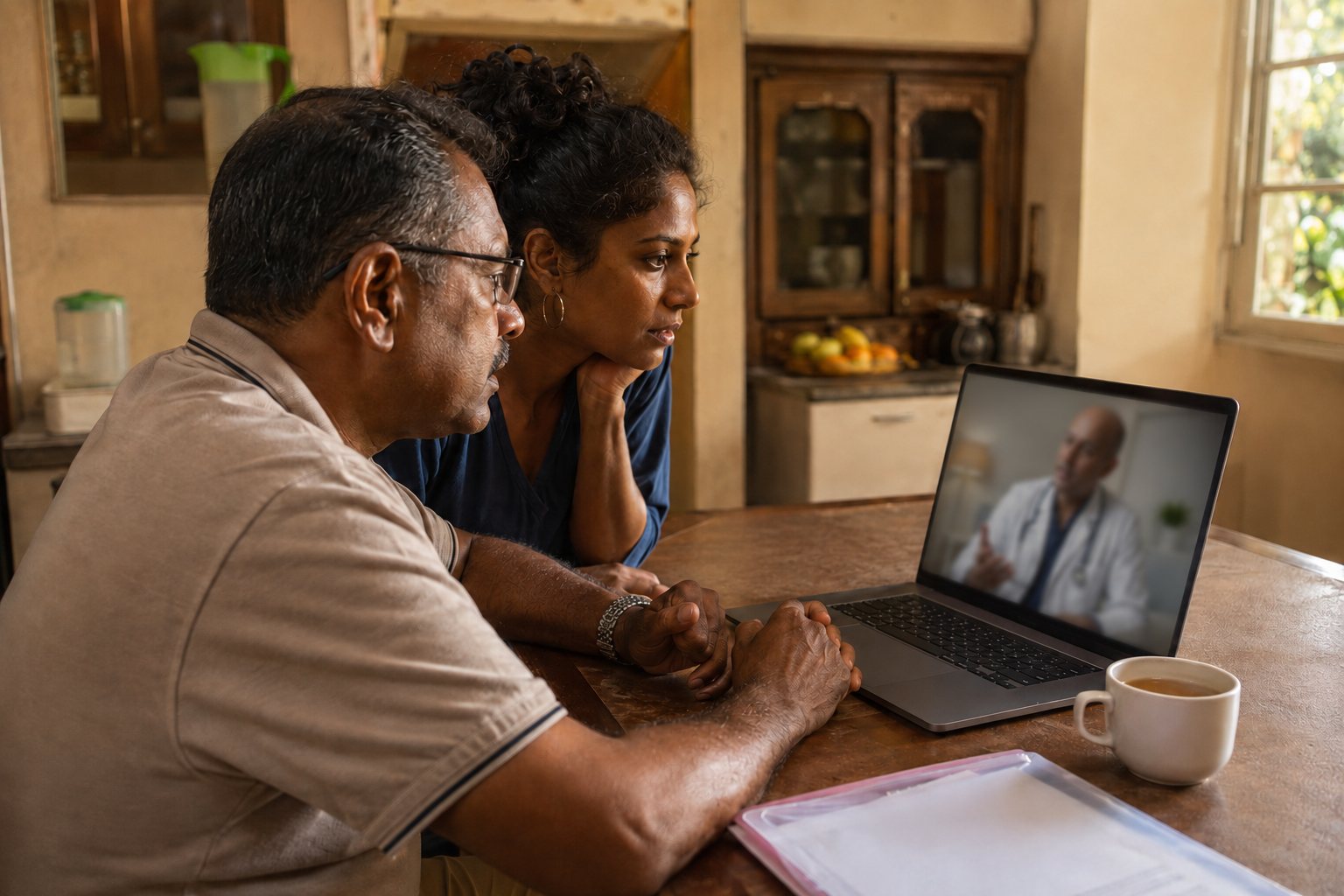
Weeks before anything is booked.You hear the plan, you ask what else is possible, you ask what it will really cost. Then you close the laptop and think about it for a week.
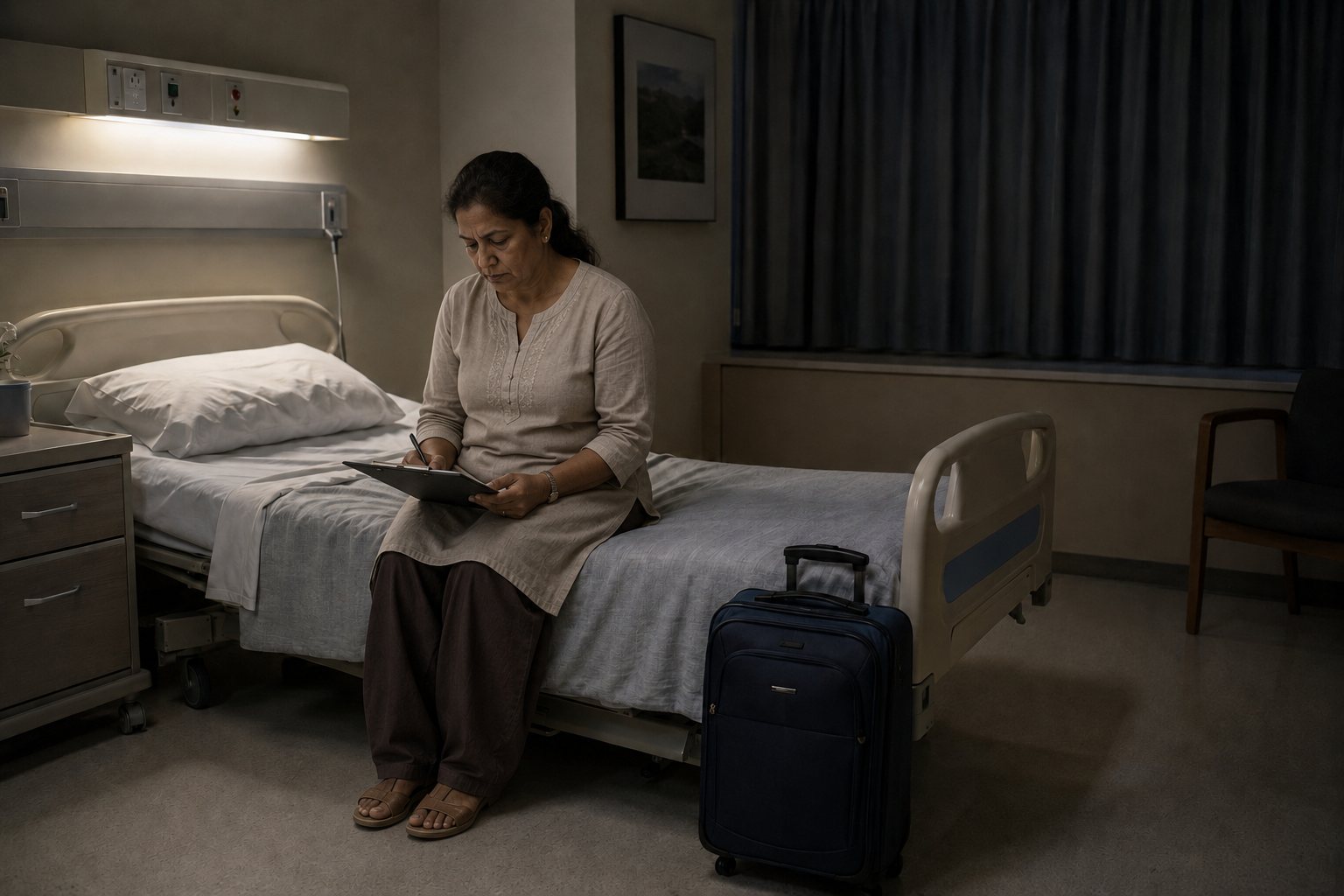
The night before, four thousand kilometres from home.The flight is paid. The leave is taken. Saying “let me go home and think” is no longer a real choice. That is not consent — it is a formality.

01 What consent is supposed to be
Consent is not a legal shield held up before you are wheeled in. Done properly it is a calm discussion, held early enough that you can still change your mind. Four things belong in it, in this order — and benefit and risk carry equal weight.
The operation in plain words: what is removed, repaired or replaced, how long it takes, what you will feel afterwards.
Stated in the terms that matter to you — pain, walking, work, appearance — not in surgical success rates alone.
Always ordered common first, then less common, uncommon, extremely rare. Rare things last, so the frequent ones are not buried.
Other procedures, other techniques, non-surgical management, and waiting — each with its limits and consequences.
02 What makes this different
Most medical-travel platforms put a salesperson between you and the specialist. You send your reports, a coordinator sends back a price, and you meet the doctor for the first time the day before your operation. We do it the other way round.
The specialist reviews your case and consults you the way they would in their own routine clinic — history, your imaging and reports examined, findings explained, a plan discussed. Not a sales call with a doctor's photograph on it.
Before you meet the specialist, our clinical team organises your reports, structures your history, identifies what is missing, and helps you write down the questions that actually matter for your decision.
The session is yours alone. With your consent it is transcribed live, so neither you nor the doctor has to break the conversation to take notes — and nothing is lost because you were anxious and stopped listening halfway through.
You receive the full written record alongside the plan in plain language. Read it again at home, show it to your family, take it to your own doctor. What you were told is now something you hold, not something you have to remember.
What we are not: a hospital, a broker quoting you a bed rate, or anyone who earns more when you say yes.
03 Find your surgery
Each procedure is decoded in the same four-part structure — description, benefit, risk, alternative — plus the part almost nobody discusses: why some patients remain unhappy after an operation that went technically well.
04 Costing
Package prices are built around the routine case: uncomplicated, low risk, discharged on schedule. The difficulty is that nobody checks whether you are that case before the number is sent to you. One angioplasty needs one stent and another needs two. One patient can go straight to surgery; another needs their sugars controlled first, which means more days. We do not set prices — hospitals do — but we make sure your case is assessed before one is built.

How many implants your imaging suggests, what must be corrected before you are fit for surgery, and which other departments will need to be involved.
You are shown what a smooth case costs, what usually happens, and what a complication would add — so you can plan, and travel with a sensible reserve.
The same operation is often done to the same standard at a smaller hospital for materially less. What differs clinically is the backup available if something goes wrong — and that judgement should be yours.
05 Going home afterwards
Many patients quietly stop going back to the doctor who first saw them, because it feels awkward to return having gone abroad without them. So they come home from major surgery with nobody local following them up. That is the most dangerous part of the whole journey, and it is entirely avoidable.
What the specialist advised and why, so the person who knows your history can agree, disagree, or add something we did not know.
What was done, what to watch for, and what follow-up you need — so your care continues with your own doctor instead of restarting from nothing.
Only with your permission, and only to a doctor you name. If you would rather we wrote to nobody, we write to nobody.
06 How it works
The operation you have been offered, where you are, roughly when you could travel, and what worries you most. Two minutes, no cost, no obligation.
Reports collected and organised, history structured, gaps identified, your questions written down — so the specialist's time goes on your decision, not on paperwork.
A proper one-to-one consultation, conducted the way that doctor sees any patient in their clinic. Transcribed live with your consent.
Everything in writing: what was said, what is proposed, every treatment plan that genuinely applies, and what each costs — including what the price does not cover.
Deciding against surgery, or deciding to have it at home, is a legitimate outcome here. Take the transcript to your own doctor if that helps you decide.
07 Where our patients write from
Travelling for surgery adds problems a local patient never has: a compressed stay, a follow-up thousands of kilometres from the surgeon who operated, and a decision often made entirely from a website. Everything here is written with that in mind.

08 How we are paid
We charge patients directly for two things: the My Surgery, My Risk report and the consultation itself, whether that is one specialist or the two-opinion panel. The price is shown before you pay.
Separately, international treatment prices already contain a referral margin, set by the hospital, present whether or not anyone refers you. Where a patient reaches a hospital through us, part of that margin comes to us. We cannot remove it and we will not pretend we work for nothing.
What we can control is the order things happen in. Your clinical conversation happens before any hospital is named, you receive the transcript in writing, and you are free to use any facilitator you wish, or none.
Read the full disclosure, including how your records are handled →
Two minutes to describe your situation. We reply within 24–48 hours, telling you honestly whether a consultation would help you.
Before you read on
So we show you the right contact details and the examples that apply to your country. We do not ask for your name or your email.
One more
Medical wording has to be exact, so we only publish a language once a doctor who speaks it has checked every page. The others are being prepared now.