The consult
This page explains exactly what happens before, during and after you speak to a specialist through us — and what we will never do.
01 The problem we are solving
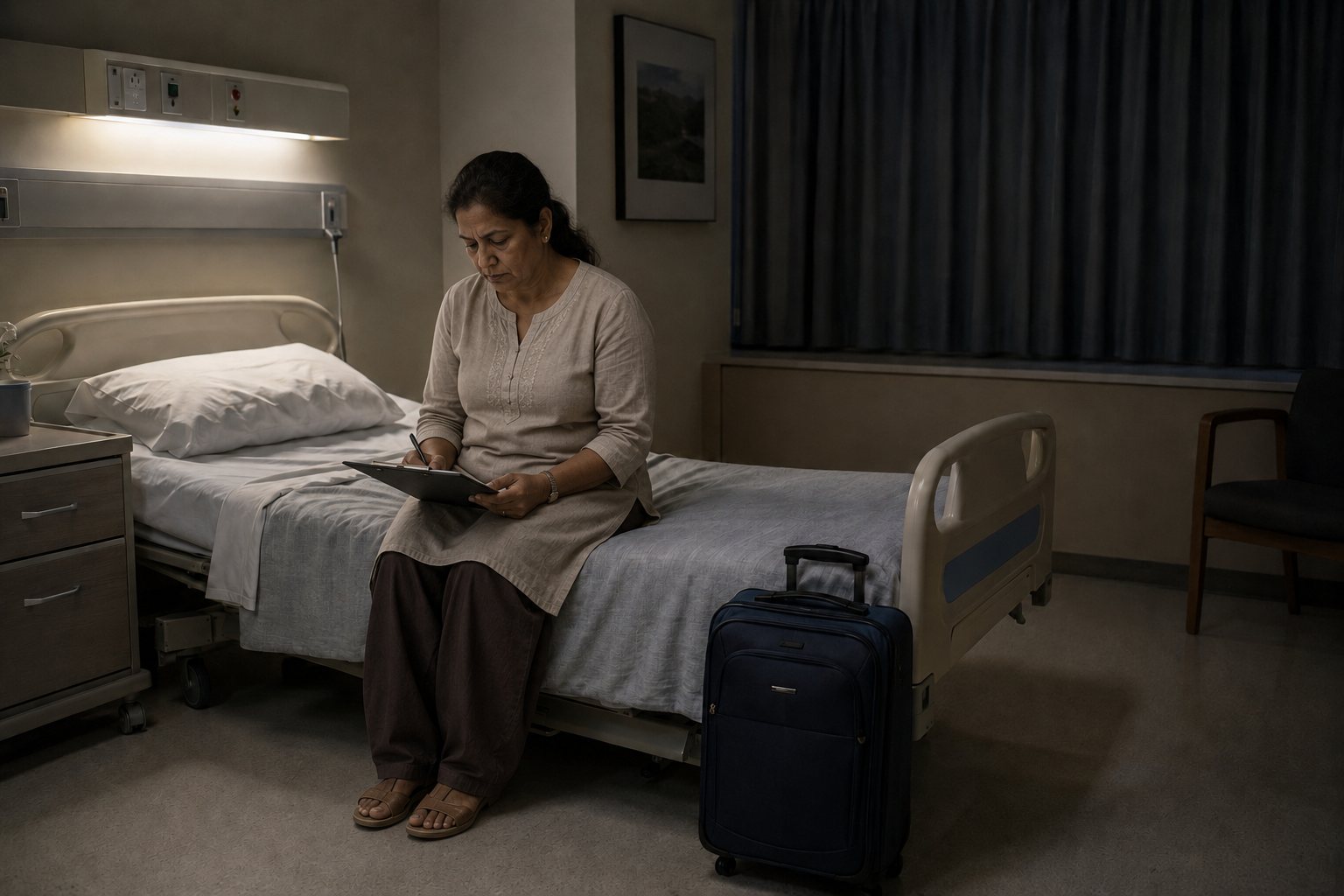
Here is how medical travel usually works. You send your scans to an email address. A coordinator — not a doctor — forwards them to a hospital. A price comes back, formatted like a hotel package. You book flights. You meet the surgeon for the first time the evening before your operation, when saying "actually, I want to think about this" would cost you a plane ticket, a hotel bill, and a month of leave you already took.
By then the consent form is a formality. Everything that should have been a decision has already been made by momentum.
We invert that order. The consultation happens first, from your own home, weeks before anything is booked — and it is a real one.

02 Before the consult
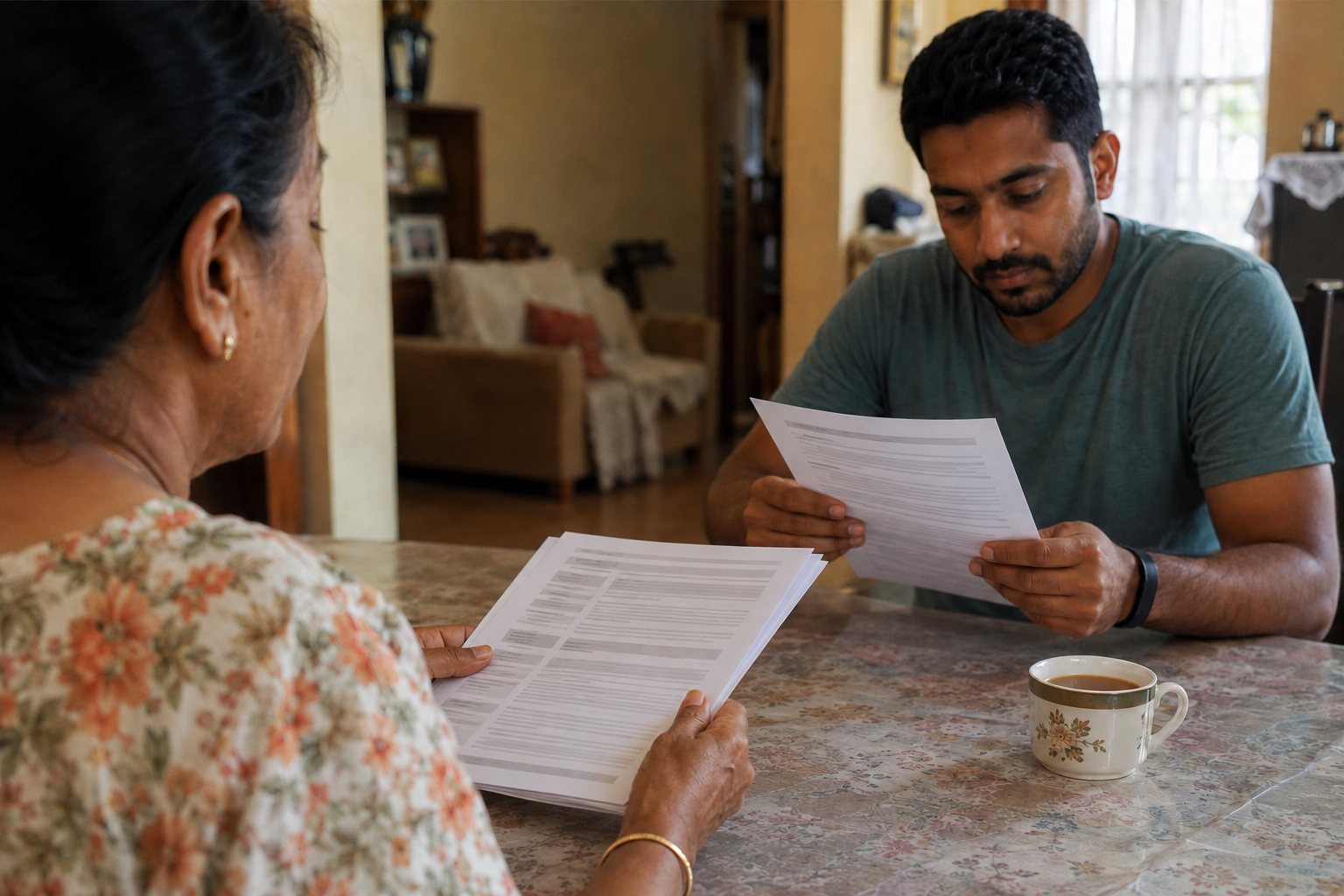
Specialists' time is short, and patients rarely get to use it well — not because they are not intelligent, but because nobody told them what the doctor would need. Our medical team does that work before your appointment, at no extra cost.

Scans, reports, discharge summaries, biopsy results, prescriptions. We check they are legible, complete, and recent enough to be useful. Poor-quality images are a common reason a consult achieves nothing.
When the problem started, how it has changed, what has already been tried, your other conditions, your medicines, your allergies, previous operations and anaesthetics. Written up the way a doctor reads it, so the specialist starts from a clear picture rather than assembling one.
If a decision cannot be made without a test you have not had, you will know before the consult rather than at the end of it. Sometimes that test is best done at home, cheaply, and we will say so.
Most people leave a consultation having forgotten the one thing they most wanted to ask. Your questions go into the case file in advance, so they get answered whether or not you remember to raise them.
03 During the consult
This is the part that cannot be faked and cannot be delegated. It is the specialist, and you.

No coordinator sitting in to steer the conversation towards a booking. You are welcome to have a family member with you, and if you would rather not be alone for difficult news, we would encourage it.
The specialist takes your history in their own way, goes through your imaging and reports with you on screen, explains what they find, and sets out what they would recommend and why — including where the evidence is uncertain.
Consults run in English or Hindi as standard. Tell us in advance if you need another language and we will arrange interpretation rather than let you nod through a conversation you only half-followed.
We use AI transcription so neither of you has to stop and take notes. You are told before recording begins, you can decline and still have the consult, and you can ask us to stop at any point.
A consultation is a clinical opinion given remotely. It is not a physical examination, and it does not create the same doctor–patient relationship as being seen in person — which is exactly why the specialist may end it by telling you they need to examine you before committing to a plan.
04 After the consult

| You receive | What it is | Why it matters |
|---|---|---|
| The transcript | The full written record of the conversation, unedited. | You do not have to remember what was said under stress, and your family can read it too. |
| The clinical plan | What the specialist recommends, in plain language, in the four-part consent structure. | This is your consent conversation — held early, in writing, while you can still change your mind. |
| Every applicable option | Other treatments that genuinely apply to your case, including non-surgical management and waiting. | An opinion with only one option in it is not an opinion. |
| The costing | What each plan would cost, what is included, and what could add to it. | You compare real numbers, not headline ones. |
| The prescription | Any medicines, tests, imaging or interim treatment the specialist advises now, with the reasoning for each. | Your case improves, or becomes clearer, while you decide. Nothing is wasted waiting. |
You can send written follow-up questions for fourteen days afterwards. If your case changes materially — a new scan, a new symptom — tell us and the specialist will look again.
05 The prescription
A consultation is not only advice about an operation. Often the specialist can see something that should be done now, whatever you eventually decide — and where that is so, it is written down for you.
Interim treatment for pain, swelling, infection or symptom control, so the weeks you spend deciding are not weeks spent suffering.
A blood test, a scan, or a better-quality version of an image you already have. Cases are often undecidable simply because one investigation is missing — and it is usually quicker and cheaper to have it done at home than to fly for it.
Sugars brought under control, blood pressure or anaemia corrected, blood thinners planned around, weight or smoking addressed. This work takes weeks. Doing it before you travel rather than after you arrive can shorten your stay, reduce your risk, and lower what the treatment costs.
If a test done now saves a trip, or lets the decision be made a month earlier, you will be told.
Everything is written with the reasoning attached, so the doctor who knows you can review it, agree or disagree, and prescribe accordingly. Medicines are advised, not dispensed — anything recommended should be checked and issued by a doctor who can see you.
06 The limits
We work on a scheduled basis over days. Chest pain, severe bleeding, a cold or dusky limb, a sick newborn, sudden weakness or loss of speech — go to your nearest emergency department now.
The specialist is paid for the consultation and earns the same whether you proceed or not. If you decide against surgery, or decide to have it at home, that is a complete and successful outcome as far as we are concerned.
Many patients quietly stop going back to the doctor who first saw them, because it feels awkward to return having gone abroad without them. So they come home from major surgery with nobody local following them up. If you want it, we write to your own doctor before you travel and again afterwards — only with your permission, and only to a doctor you name.
The specialist will tell you what usually happens and how often it does not. Anyone who offers you a guaranteed outcome is not being straight with you.
Send us your case and we will tell you honestly whether a consultation would help you, and what it would involve.
Before you read on
So we show you the right contact details and the examples that apply to your country. We do not ask for your name or your email.
One more
Medical wording has to be exact, so we only publish a language once a doctor who speaks it has checked every page. The others are being prepared now.